A new startup, Innovision, has recognized to problem that exists for those who are blind. Although voice feedback is convenient, and it opens many opportunities, it doesn’t promote literacy. Blind people need access to braille material, and current pricing on braille displays keeps most people from being able to access the printed word, especially in developing countries. Innovison has created the BrailleMe, which is a simple braille display that plugs directly into your phone or computer. It also has Bluetooth capabilities.
Source.
How To Get More Storage in Android
It’s easy to run low on storage in Android, even with a phone that comes with 16 or 32GB as standard. Here are some tips for how to free up space on Android, plus some advice on ways you can get more storage in Android.
How to free up space on Android
• Back up photos and video to Google Photos, then delete them from your phone: Photos and video are one of the biggest space hogs on any Android phone, and more so as their integrated cameras come with increasingly high megapixel counts. Download the free Google Photos app from Google Play, then in the Settings menu select to back up all photos and video over Wi-Fi. Once the media has transferred you can delete them from your phone (though be very careful to delete them from the Gallery app rather than Google Photos itself).• Move other files to Google Drive: In a similar fashion to moving your photos and video to Google Photos, you can use Google Drive (another free app) or any other free cloud-storage app to store other files. Both steps are worth taking even if you aren’t running low on storage, since they will mean you won’t lose your media should you break or lose your device. The only down side is you’ll need an active internet connection to view your files.
Smart Eyeglasses Help You See Clearly Without the Need to Change Proscriptions.
The University of Utah has come up with a remarkable concept, a pair of smart glasses that will adjust to your proscription, just by uploading the proscription by way of a smart phone app. Many people need glasses, especially as they age, and there is often a constant need to purchase new glasses as your proscription changes. Now imagine how much easier it will be to maintain good vision with this new concept.
From the developer
Jan. 25, 2017 – The days of wearing bifocals or constantly swapping out reading glasses might soon come to an end.
University of Utah electrical and computer engineering professor Carlos Mastrangelo, and doctoral student Nazmul Hasan have created “smart glasses” with liquid-based lenses that can automatically adjust the focus on what a person is seeing, whether it is far away or close up.
“Most people who get reading glasses have to put them on and take them off all the time,” says Mastrangelo, who also is a professor for USTAR, the Utah Science Technology and Research economic development initiative. “You don’t have to do that anymore. You put these on, and it’s always clear.”
The human eye has a lens inside that adjusts the focal depth depending on what you look at. But as people age, the lens loses its ability to change focus, which is why many people ultimately require reading glasses or bifocals to see objects up close and regular eyeglasses to see far away, also known as farsightedness and nearsightedness, respectively.
So Mastrangelo and Hasan have created eyeglass lenses made of glycerin, a thick colorless liquid enclosed by flexible rubber-like membranes in the front and back. The rear membrane in each lens is connected to a series of three mechanical actuators that push the membrane back and forth like a transparent piston, changing the curvature of the liquid lens and therefore the focal length between the lens and the eye.
“The focal length of the glasses depends on the shape of the lens, so to change the optical power we actually have to change the membrane shape,” Mastrangelo says.
The lenses are placed in special eyeglass frames also invented by Mastrangelo, Hasan and other members of the research group with electronics and a battery to control and power the actuators. In the bridge of the glasses is a distance meter that measures the distance from the glasses to an object via pulses of infrared light. When the wearer looks at an object, the meter instantly measures the distance and tells the actuators how to curve the lenses. If the user then sees another object that’s closer, the distance meter readjusts and tells the actuators to reshape the lens for farsightedness. Hasan says the lenses can change focus from one object to another in 14 milliseconds. A rechargeable battery in the frames could last more than 24 hours per charge, Mastrangelo says.
The lenses are placed in battery-powered frames that can automatically adjust the focal length of the lenses based on what the wearer is looking at. Researchers expect to have smaller, lighter frames with the technology in as early as three years.
Before putting them on for the first time, all users have to do is input their eyeglasses prescription into an accompanying smartphone app, which then calibrates the lenses automatically via a Bluetooth connection. Users only needs to do that once except for when their prescription changes over time, and theoretically, eyeglass wearers will never have to buy another pair again since these glasses would constantly adjust to their eyesight.
Currently, the team has constructed a bulky working prototype that they put on display at last month’s Consumer Electronics Show in Las Vegas, but expect to constantly improve the design to make them smaller and lighter. Mastrangelo said a lighter, more attractive pair could hit the marketplace in as early as three years and that a startup company, Sharpeyes LLC, has been created to commercialize the glasses.
Source.
Personal Cargo Robot Could be Major Help for Disabled.
The Piaggio Group, owners of the Vespa brand, have formed a new robot focused company called Piaggio Fast Forward. Their first product is Gita, a personal cargo robot that can haul up to 40 pounds of supplies autonomously or by following a human operator. It can move up to 22 miles per hour and can navigate sidewalks.
The product will be unveiled on Febuary second, and it could be a huge deal for people with disabilities who need a way to transport groceries, laundry, or other supplies without human assistance.
Apple Receives Louis Braille Award from the Associated Services for the Blind and Visually Impaired.
Sense 1959, the Associated Services for the Blind and Visually Impaired, (ASB), has awarded people and organizations for their contributions and inspirational achievements.
Apple was the first company to provide a fully functional screen reader built-in to their operating system, the first to make a touch screen accessible, and the first to provide an accessible wearable device.
The company has also supplied braille support in 25 languages for over 70 plug and play refreshable braille devices.
Source.
Cool Picks: January 28, 2017
Join hosts Joel Ramos, James Oates and Jessica Rickards as they discuss their Cool Picks.
Not a week goes by that we don’t bring you “Cool Picks” that we use on a daily basis:
The UberEats app comes in handy when you just got to have that burger. Make sure to listen to catch Jessica’s favorite orders on the app. It’s available for both Android and iOS.
Planning on upgrading to a new phone or simply want to make sure you don’t lose all those important contacts on your smart phone? Then you definitely want to check out James’ recommendation of the “My Contacts Backup” app for iOS.
3D Printing Can Help Blind Students Learn About Sex
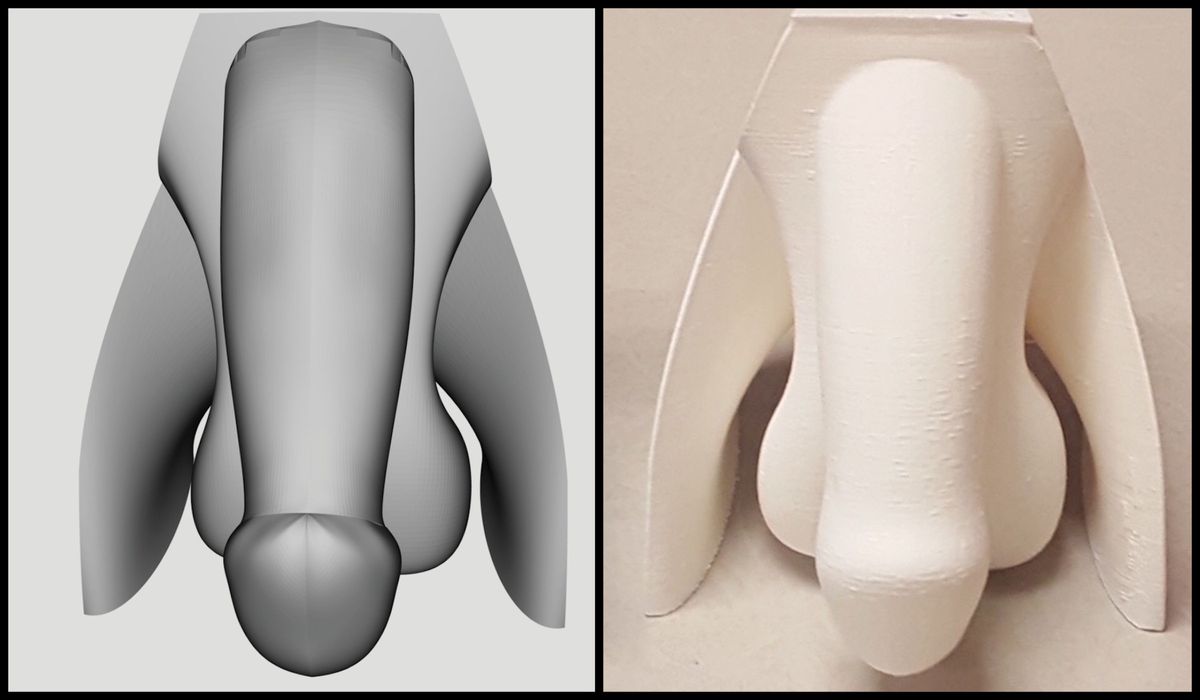
3D-printing is letting blind students experience accessible sex ed for the first time.
Researchers created 18 3D figures that model sex organs during various states of arousal
They range from a flaccid penis to a dilated vaginal opening, allowing students to “feel” their way though sexual health lessons.
Studies show that 61% of blind adults or those with low vision say their vision status had a negative impact on the way they were able to participate in sex education.
It’s a gap advocates and researchers at Benetech, a nonprofit organization specializing in tech for good, set out to solve by creating these models of various penises and vulvas.
High Tech Glove Helps You Feel in VR.
3-D printed prosthetics limb company, Exiii, has come up with a cool glove that helps you feel objects in a virtual environment. The gloves are bulky and futuristic looking, but they have motors in the glove that help simulate the sensation of touch.
For people who are blind, VR needs to have other sensations available in addition to sight for them to interact with the virtual world. The gloves will most likely also be used in physical rehabilitation, and as controls for robots and drones.
Check out this video demonstrating the glove.
New Quantum Computer From Canadian Company D-Wave, Twice As Powerful As Previous Model
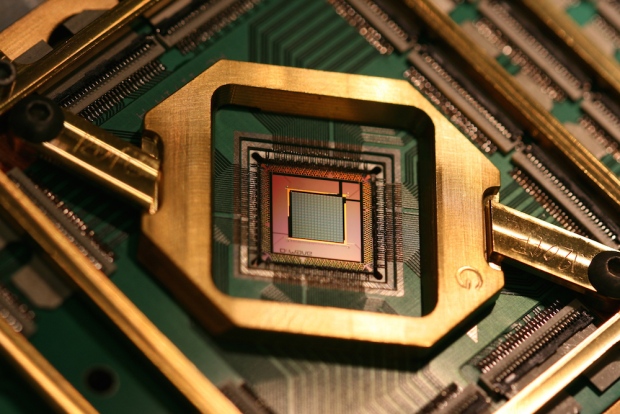
The processor boasts 2,000 quantum bits over its 1,000 version
In short: with more quantum bits, researchers can solve certain problems more efficiently, and in some cases, faster. Basically, it’s an improvement on what D-Wave already sells.
But a universal quantum computer, one that can solve a wider range of problems, is still a way off.
“They have remained with the same architecture, but what they’ve done is they’ve increased its capacity for computation,” explained Amr Helmy, a professor of electrical and computer engineering of the University of Toronto. he is also director of the university’s Centre for Quantum Information and Quantum Control.
Spotlight On TellMe TV: A Futuristic Approach To Described Television
Join Jessica Rickards along with TellMe TV CEO, Kevin Shaw, for this spotlight on TellMe TV. Gone is the old name and website for this fantastic audio description service, and what has replaced it is a more streamline, futuristic site with greater mobile device integration and app support.
If you would like to try out this incredible service, TellMe TV is offering a special promotion just for our listeners. If you would like to start a free trial of TellMe TV, enter promo code TELLME17 when you sign up and you’ll receive 3 months free.